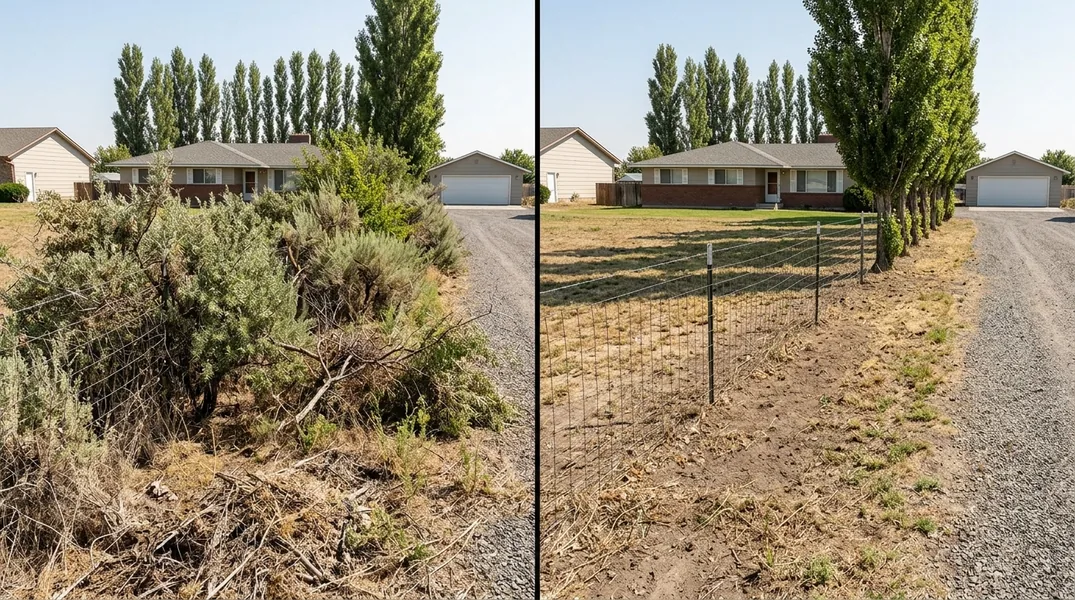
Understanding Wind and Dust Storm Season in the Tri-Cities
If you live in Kennewick or the surrounding Tri-Cities area, you know that spring and early summer bring some of the most challenging weather conditions of the year. Wind and dust storms are a fact of life here, with gusts regularly exceeding 40 miles per hour and sometimes reaching dangerous speeds that can topple even mature trees. These powerful storms don't just create an inconvenient mess on your property, they pose genuine risks to your home, vehicles, and the safety of anyone nearby.
The Tri-Cities region sits in a unique geographic location where weather patterns converge, making us particularly susceptible to severe windstorms. Unlike areas with more stable atmospheric conditions, our landscape experiences rapid pressure changes and wind funneling through the Columbia River basin. This means your trees face real stress during storm season, and without proper preparation, they become liabilities rather than assets. Understanding how these storms affect your landscape is the first step toward protecting your property and your family.
Why Trees Fall During Windstorms: The Science Behind Wind Damage
When a tree falls during a windstorm, it's rarely a random event. Trees fail for specific reasons, and most of them are preventable with proper care and maintenance. The primary factor is structural weakness, which develops when a tree has competing leaders (multiple main trunks), included bark in branch unions, or excessive weight concentrated in one area. During high winds, these weak points become failure points. A tree that might stand perfectly fine on a calm day can snap or uproot when subjected to sustained wind pressure, especially if it hasn't been properly maintained.
Another critical factor is root health and soil stability. Trees growing in compacted soil or those weakened by disease, pest damage, or previous storm trauma are far more likely to topple. Additionally, trees that are overly dense with foliage act like sails, catching wind and creating enormous lateral forces on the trunk and root system. This is why Tree Trimming & Pruning isn't just about aesthetics, it's about survival. Proper pruning reduces wind load, improves branch structure, and allows wind to pass through the canopy rather than pushing against it like a solid wall.
Preventive Tree Trimming in Kennewick: Your First Line of Defense
The single most effective way to protect your trees from windstorm damage is preventive maintenance through professional trimming and pruning. This isn't the same as casual yard work or topping your trees short. Proper preventive trimming follows arboriculture standards and focuses on removing dead wood, eliminating crossing branches, thinning dense canopies, and correcting structural problems before they become catastrophic failures.
In Kennewick, the best time to perform preventive trimming is late winter through early spring, before our windstorm season kicks into high gear. This timing allows trees to heal from pruning cuts before they face stress. During a professional assessment, an arborist will identify weak branch attachments, remove branches that cross or rub against each other, and thin the canopy to reduce wind resistance. For trees with multiple leaders or unbalanced growth patterns, selective pruning can dramatically improve their ability to withstand high winds. Trees that receive this kind of attention are far less likely to fail during storms, protecting not only your property but also reducing the risk of injury to people on or near your land.
Storm Prep Tree Service: What You Should Do Now
If you haven't already prepared your trees for storm season, now is the time to act. A comprehensive storm prep assessment should include an evaluation of every significant tree on your property. Look for obvious hazards like dead branches hanging over your house or driveway, trees with visible cracks or cavities, or trees that are visibly leaning. These are red flags that require immediate professional attention. Beyond visible problems, an arborist can identify structural weaknesses that aren't obvious to an untrained eye, such as included bark in branch unions or branches that are too heavy for their attachment point.
Beyond trimming, storm prep may include Tree Removal of trees that pose unacceptable risk. If a tree is diseased, severely damaged, or structurally compromised beyond repair, removing it before a storm is far safer and more cost-effective than dealing with a failed tree during an emergency. Your arborist can also recommend cabling or bracing for valuable trees with structural issues that can be preserved, though this is typically a temporary solution. The key is developing a proactive plan rather than waiting for a storm to force your hand. Contact Kennewick Tree Service at (509) 581-6255 to schedule a professional assessment and get a free estimate for your specific situation.
Emergency Tree Service Near Me: When a Storm Strikes
Despite your best preparation efforts, severe storms sometimes cause unexpected damage. When a tree falls on your roof, blocks your driveway, or creates an immediate safety hazard, you need fast, professional help. Emergency Tree Service is available for these situations, and response time matters. Fallen trees can damage utilities, block emergency access, or create additional hazards as they shift and settle. Attempting to remove a fallen tree yourself with a chainsaw is one of the most dangerous tasks a homeowner can undertake, with serious injury risks.
Professional emergency response teams have the equipment, training, and experience to safely remove fallen trees, clear debris, and stabilize your property. They can also assess whether your home's foundation, utilities, or structure has been compromised. If you're dealing with a tree emergency in the Tri-Cities, calling a professional service immediately is the safest choice. Kennewick Tree Service provides emergency response services and can be reached at (509) 581-6255 for urgent situations.
Planning Ahead: Making Storm Prep a Regular Practice
The most successful property owners in windstorm-prone areas treat tree maintenance as an ongoing responsibility, not a one-time task. Rather than waiting for visible problems to develop, they schedule professional assessments every two to three years, with more frequent attention for older trees, newly planted trees, or trees that have previously sustained storm damage. This approach catches problems early when they're easier and less expensive to address. A tree that needs modest pruning today might need emergency removal after a storm if problems aren't corrected.
Building a relationship with a local tree service provider means you have a trusted resource when questions arise. Whether you're wondering if a tree looks healthy, concerned about a branch that seems heavy, or trying to decide if a tree should be removed, having a professional you can call makes decision-making easier. For residents throughout the Tri-Cities, including Richland and Pasco, establishing this kind of preventive care routine is the most effective way to protect your landscape investment. Call Kennewick Tree Service at (509) 581-6255 or visit our website to discuss your tree care needs and establish a maintenance plan that fits your property and budget.
Looking for a professional tree service contractor in Kennewick? Kennewick Tree Service responds fast for all your tree service needs.
Get a Free QuoteOur services: Tree Removal · Tree Trimming & Pruning · Stump Grinding